
“Religions are different roads converging to the same point. What does it matter that we all take different roads as long as we reach the same goal? In reality there are many different religions as there are individual people.”
Parents have the right to withdraw their child from all or part of RE studies. Please email nanpean@tpacademytrust.org to make an appointment with a member of our team to discuss this.
Rationale: Purpose of Study
Nanpean CP School believes in learning about the achievements and aspirations from different world religions. In today’s world, it is vital to teach our children about the traditions, festivals and values of others. We also encourage children to share their experiences and celebrate their own beliefs. RE helps to prepare our pupils to become responsible citizens by raising local, national and global concerns. Our school rules also underpin the values taught by different religions and our school assemblies also celebrate a variety of morals.Intent
At Nanpean Primary School, our Religious Education (RE) curriculum is designed to engage, inspire, and challenge all pupils, equipping them with the knowledge and skills to explore and understand a range of religious and non-religious worldviews.
We aim to foster a sense of curiosity and respect for the beliefs, practices, and traditions of others, developing pupils' ability to think critically, ask thoughtful questions, and reflect on their own values and experiences. In doing so, we align with the guidance of NATRE using RE Today as our chosen scheme, promoting balanced and rigorous teaching that enables children to make sense of religion and worldviews in the modern world. This is in accordance with the Cornwall Agreed Syllabus.
Our RE curriculum ensures children:
-
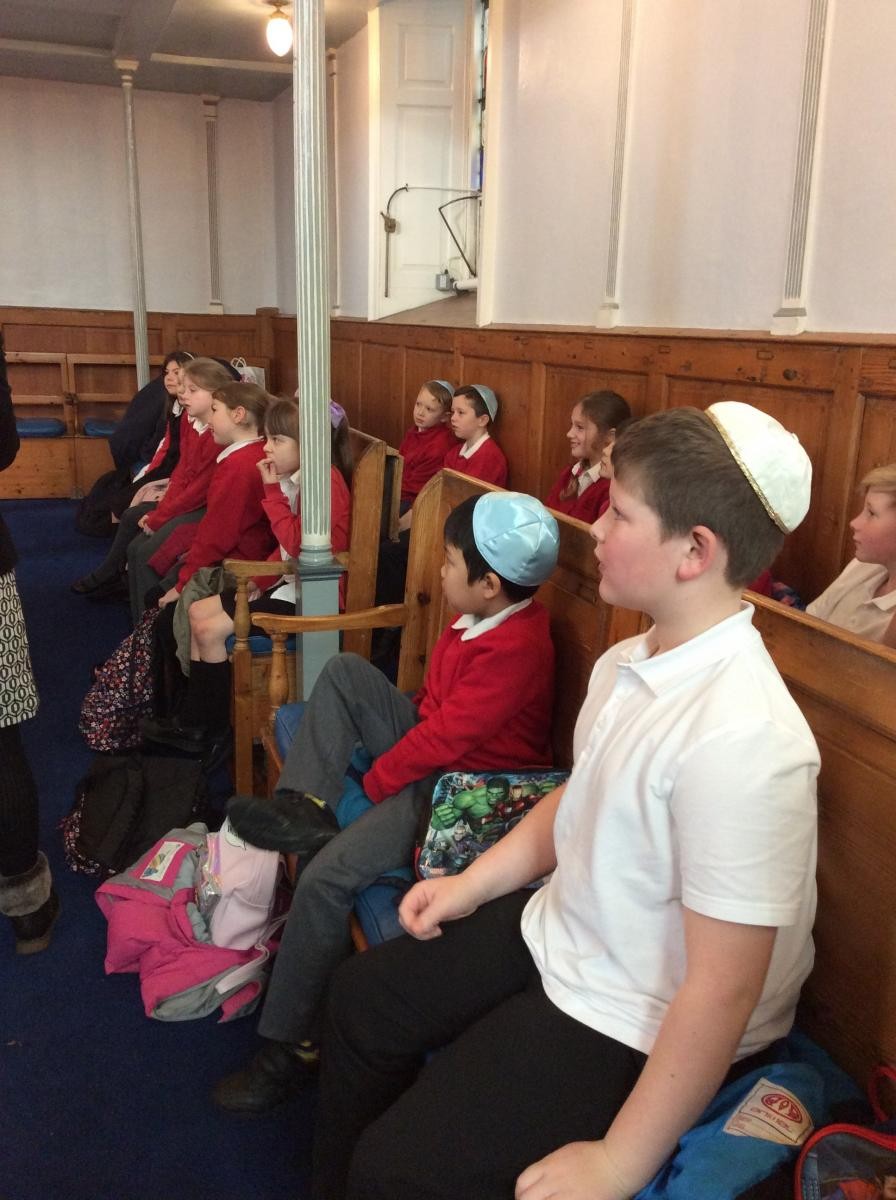
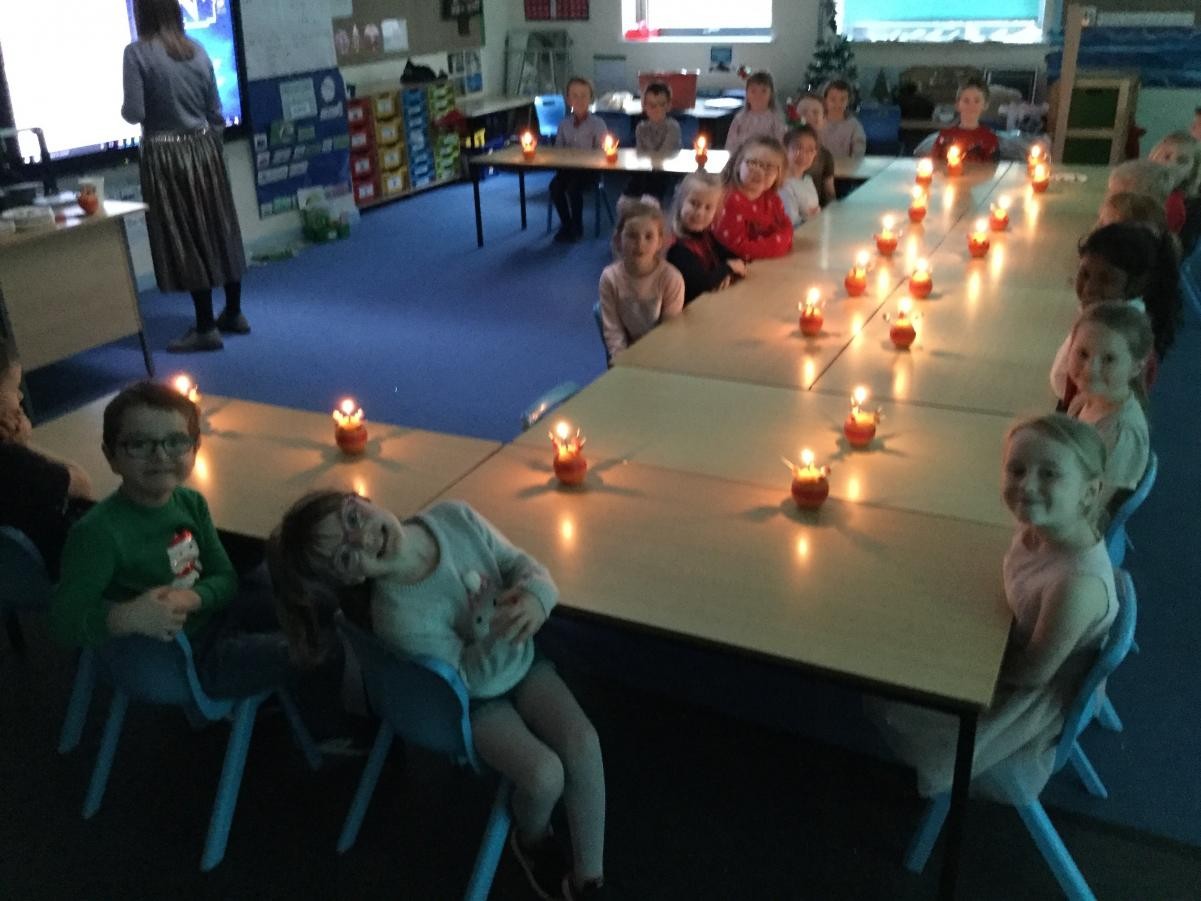
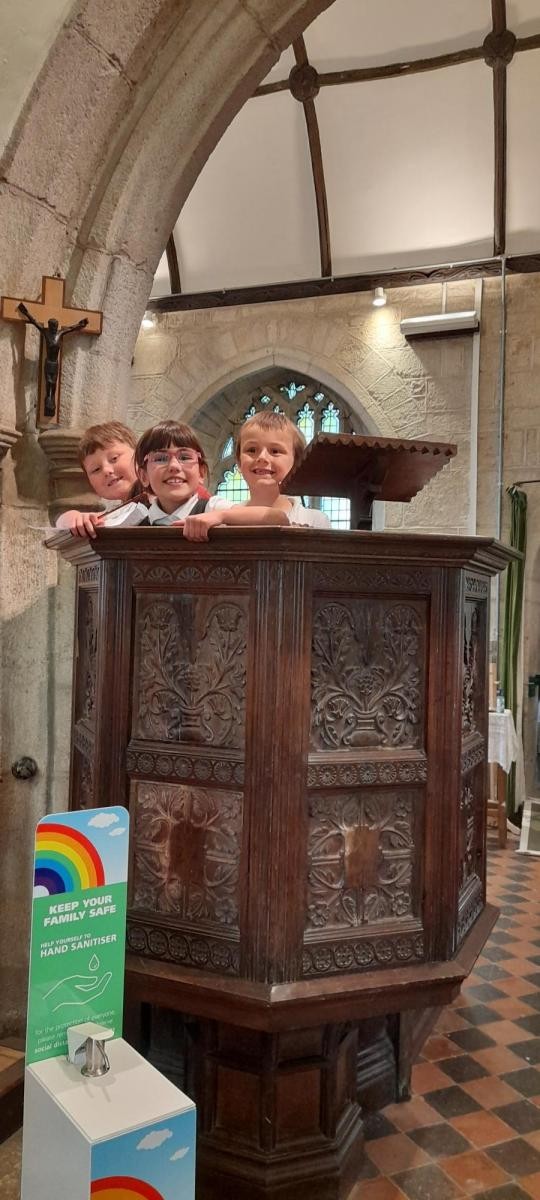
Learn about and learn from major world religions, including Christianity, Judaism, Islam and Hinduism, , as well as non-religious perspectives such as Humanism.
-
Develop understanding of the diverse religious landscape of Cornwall and the wider UK, recognising religion as a lived and dynamic aspect of many communities.
-
Explore key themes such as belief, identity, belonging, community, morality, and spirituality through carefully sequenced and age-appropriate enquiry-based learning.
-
Reflect on their own experiences and views while developing empathy, tolerance, and the ability to engage in meaningful dialogue.
By the time pupils leave Nanpean Primary School, they will have a well-rounded understanding of religious and non-religious worldviews, an appreciation for diversity, and the critical thinking skills needed to navigate a multi-faith, multicultural world with respect and confidence.
Implementation
The implementation of Nanpean School’s programme of study for RE is in accordance with The Agreed Syllabus for Religious Education in Cornwall. All religions and their communities are treated with respect and sensitivity and we value the links that can be made between home, school and a faith community. We acknowledge that each religion studied can contribute to the education of our pupils, and we promote teaching in RE that promotes open enquiry and first-hand experiences wherever possible.
The RE Curriculum at Nanpean School is well thought out and is planned to demonstrate progression and thus ensuring a high quality experience for our pupils. The RE Curriculum has a focus on disciplinary knowledge which builds on the children’s own experiences and uses contemporary issues to stimulate discussion, while reflection on their learning enables the children to make sense of beliefs, understand their impact and make connections. Substantive knowledge is taught through tasks being provided to children whcich enable them to gain knowledge, understand tis and apply it in relation to religions and belifes.
RE is implemented by:
- following the NATRE RE today, are adapted to meet the Cornwall SACRE Agreed Syllabus. We use the RE Today schemes of work and planning materials to provide a progressive and balanced curriculum across all key stages
- every unit is based around a key question.
- Learning activities to support the learning are selected and designed, providing engaging activities with an appropriate level of challenge to all learners, in line with the school’s commitment to inclusion.
- Displaying a range of recording strategies to record the learning in RE books or online profiles.
Impact
Religious Education (RE) offers opportunities for personal reflection and spiritual development while enhancing children’s awareness and understanding of religions and beliefs. As a result, it also encourages our pupils to learn from different religions, their beliefs, values and traditions while exploring their own beliefs. RE plays an important part in preparing pupils for adult life, employment and lifelong learning.
RE is assessed through:
- children being able to discuss why people choose or not to choose a certain religion.
- children showing respect and tolerance towards others personal beliefs and views,
- children showing the understanding and skills needed to handle questions raised by religion and belief
- children being able to talk about their learning.
- retrieval opportunities throughout the unit of learning.
British Values
At Nanpean School, British Values are embedded across the Curriculum, and RE in particular makes a key contribution to children’s exploration of the British Values. RE offers opportunities to build an accurate knowledge base about religions, their beliefs and values. This in turn supports our children to move beyond attitudes of tolerance to one of an increasing mutual respect for others, thus celebrating diversity.
Tolerance – Nanpean School always challenges and does not accept intolerant attitudes to members or the community, which could be attitudes that show rejection on the basis of a number of reasons, such as race, faith, gender, sexual orientation or age. We endorse the virtue that every person has the right to ‘be themselves’ and this is accepted by all members of our school community. We are aware that tolerance in itself is often not enough, this is purely a starting point to our children becoming increasingly respectful with the ability to understand and celebrate diversity. At Nanpean School, this is achieved through allowing children to think for themselves in relation to topical issues that are explored and discussed.
Mutual Respect – The RE Curriculum at Nanpean School as an ongoing focus on developing mutual respect between those of different faiths and beliefs, while promoting an understanding of what society gains through its diversity. Children are encouraged to be open-minded and warm-hearted in their respect of others, their views and diversity of different religions. Respectful attitudes are developed by considering similarities and differences between religions, including where there are similar values but the belief is different.
Democracy – In RE lessons at Nanpean School, children learn the significance of each person’s ideas and experiences through discussion. They debate and children learn to respect different perspectives to their own. This contributes to learning about democracy, examining the idea that we all share a responsibility for the wellbeing of ourselves and others.
The Rule of Law – At Nanpean School, children explore different examples of ‘codes’, including the commandments, as well as rules offered by different religious communities. They develop awareness of how individuals choose between right and wrong, good and evil, and learn to apply these ideas to themselves in their own communities. They also learn to understand that fairness requires the law be applied equally to everyone, irrespective of their social status or any protected characteristics.
Individual Liberty – Children consider questions about identity, belonging and diversity, learning about examples of pioneers of human freedom including those within different religions. Children are encouraged to reflect upon their views and how they view people with beliefs that are different to their own.
SMSC

Much of our RE Curriculum enables clear links to cultural learning, through our children developing an awareness of how different religions have influenced and shaped cultures and the people that live within them.
Children are asked to consider and comment on moral questions and dilemmas. Events and beliefs in of different religions will often be different to what our children will have experienced. Therefore, children are encouraged to show compassion for people facing dilemmas and to empathise with decisions which people make and the reasoning behind these decisions. As a result, discussion about right and wrong are explored in connection with different religions.
Children explore the similarities and differences between different religions. They examine how other religions and cultures have had a major impact on the development of British culture. Children also have opportunities to develop socially through collaborative and team working activities.
Children are encouraged to gain an understanding of, and empathy for, people from different religions and cultural backgrounds. They examine how other religions and cultures have contributed and had an impact on the development of Britain. This has links with the British Values (see above).How you can help your child at home
You can also support your child(ren) with RE learning by having open conversations and discussions about different religions, their values and beliefs.
The following websites could also be used to support your child: