
“History is who we are and why we are the way we are” – David McCullough
Rationale: Purpose of Study (taken from the National Curriculum)
A high-quality history education will help pupils gain a coherent knowledge and understanding of Britain’s past and that of the wider world. It should inspire pupils’ curiosity to know more about the past. Teaching should equip pupils to ask perceptive questions, think critically, weigh evidence, sift arguments, and develop perspective and judgement. History helps pupils to understand the complexity of people’s lives, the process of change, the diversity of societies and relationships between different groups, as well as their own identity and the challenges of their time.
Intent
At Nanpean School, we want to educate the children about the past so that they understand the current and can help to shape the future. Our History Curriculum aims to inspire children to feel inquisitive about the past by acting as historians to offer an interesting insight and to engage within their own community’s history and heritage. Through a broad and balanced view of the history of Britain and how Britain has been influenced by the wider world, it is our intent that our pupils will develop a well-rounded knowledge of the past using a variety of sources to engage enquiry and reasoning skills. Our Curriculum design helps children to draw conclusions about events that have shaped and influenced History, including significant events, people and how empires have been expanded and dissolved. Our intention is that the children then realise how societies and cultures have developed over time and how this has impacted on how we live today. Our Knowledge Organiser documents ensure children learn facts, knowledge and skills about the past, and can recall historical events, dates and people, using appropriate vocabulary.
Implementation
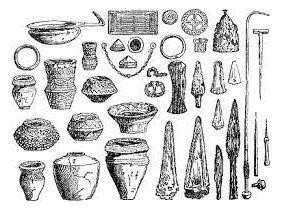
Lessons are planned through an enquiry-based approach beginning with a ‘key question’. These are used with an emphasis on pupils uncovering the past for themselves by using the historical skills of a professional historian. Pupils engage in “doing” the history, investigating using evidence and constructing their own ideas about the past. They develop an understanding that historical events can be interpreted in different ways and are prompted to ask enquiry questions such as “how do we know?” considering the beliefs and values at that time. Emphasis is placed on enquiry through examining historical artefacts and photographs, amongst other primary and secondary sources. Staff have access to Key stage History, to support the planning and teaching of history.
Impact
The impact of learning in history is assessed by:
- children being able to talk about their learning.
- verbal questioning throughout all learning opportunities
- children having opportunities to ‘show what you know’ in history books.
- reference to recording of learning in books and children’s ability to discuss this making a clear distinction between task and learning outcomes
- retrieval opportunities throughout the unit of learning.
.
British Values
At Nanpean School, British Values are embedded into the History Curriculum, where appropriate, while we also learn about British Values at other specific times, such as during Collective Worship opportunities (Assemblies).
During History, children explore issues such as democracy in their historical context and relate them to the modern day through studying periods such as Ancient Greece. This enables them to understand how changes happened (over a period of time) and to evaluate their impact.
By looking at the achievements of significant people in history, children develop an awareness of how they have influenced and shaped the country in which we live. This includes an appreciation of their work.
Teaching children to respect and value diversity is encouraged in day to day teaching and learning which helps to prepare children for life in modern Britain, through showing respect for different viewpoints and ideas as well as in the ability to work effectively together.
SMSC

History involves the mystery of how and why events in the past happened and raises questions as to what could have happened if events had different results. Artefacts are used to give children a sense of the past. Children are encouraged to explore the role played by important individuals, for good or ill, in the shaping of the world we live in.
Children are asked to consider and comment on moral questions and dilemmas. Events and beliefs in the past will often be different to what we would consider acceptable today. Children are encouraged to show compassion for people facing dilemmas and to empathise with decisions which people in the past made and the reasoning behind these decisions. As a result, discussion about right and wrong are explored in connection with events from the past.
Children explore the similarities and differences between past and present societies and are made aware of how, in the main, we are very fortunate to live in the modern world. They examine how other cultures have had a major impact on the development of British culture. Children also have opportunities to develop socially through collaborative and team working activities.
Children are encouraged to gain an understanding of, and empathy for, people from different cultural backgrounds. They examine how other cultures have contributed and had an impact on the development of Britain. This has links with the values of mutual respect and tolerance.
How you can help your child at home
Why not visit a local museum or area of historical interest to pique your child’s interest and support their learning about local History? An example of this would be Wheal Martyn China Clay Museum.
Facilitate discussions with your child in relation to their History learning (see the Overview document which is one of the attachment links above). You could also discuss with your child the important skills of being a Historian, such as considering similarities and differences (between then and now), considering continuity and change (things that have remained the same and things that have changed over time), and causes and consequences (why an event happened and what the impact of this was).
Other ideas include: dressing up / role playing as a Historical character, immersing yourself in Historical fictional stories, or even investigate your own family tree!
The following websites could also be used to support your child:
BBC History for kids www.bbc.co.uk/history/forkids
Primary History www.bbc.co.uk/bitesize/subjects/zcw76sg
This day in History www.history.com/this-day-in-history